Patrick brown is a Australian graphics designer who uses his his spare time creating artwork based on games that he loves. His work follows distinct style which has a distinct style which heavily reminds me of a comic book style.
What I love about Patrick's work is how he manages draw his work full of energy, each image is packed full of little details which all contribute towards the narrative he is using, if you have played any of the games below, you can understand all the little references and nods there are to the franchise.
It's this idea of movement and energy, that I need to bring to my style because games are all about movement.
Looking at the style in more depth, I would say this is a combination of drawing, illustrator and photoshop which means I could replicate the process using my own distinct style. This could well be a good way forward but before this, I think it would be good idea to look for more styles which can be achieved.
I have decided to look into the question a little further before I go ahead with the brief. Looking back at our worlds art history, you may notice a pattern. With the changing times and cultures, the art changed and evolved with them but where they accepted as art or did it take time for the critics and public to eventually accept them?
I've been reading a article from www.theguardian.com by Keith Stuart about types of art that wasn't socially recognised until later years. Impressionism seemed to have trouble being recognised as a form of art. This happened in 1874 when well known artists such as Monet and Degas showcased their work on the Boulevard des Capucines. They condemned them as unfinished pieces of work and even considered them to be an insult to the old masters level of skill.
The Editors response when they first encountered impressionism:"What new dogma is this," demanded one editorial, "that so long as colour is heaped on in a vigorous manner, a picture must be accepted as complete, however crude and raw it may seem, however absolute is the evidence that the artist stopped before he had done?"
Fast forward to now and Monet is recognised as one of the founders of a well recognised movement. The pattern that I see here is that games are sharing the same fate. We have critics such as Roger Ebert condemning them as pathetic and saying "they can not be art", just like the editors and critics back in 1874.
Another case in our art history lies with photography. Alfred Stieglitz (1864-1946) was a photographer determined to prove that photography was medium capable of artistic expression. Before this, yet again they weren't considered as recognised art form.
Alfred Stieglitz
Without further research I couldn't say what other mediums struggled to be recognised as art but, I would imagine the likes of Pop art and film shared the same fate.
I see this a perfect link to my project brief, computer games seem to be sharing the same fate and as much as I'd love prove that they are art, that's not going to happen, but what I can do is use this idea of a gaming package to express my opinion on the subject.
Art definition: The expression or application of human creative skill and imagination, typically in a visual form such as painting or sculpture, producing works to be appreciated primarily for their beauty or emotional power:
Definition From: www.oxforddictionaries.com
This question of "are games a form of art" is one that's been in debate for many years. In this project I have to develop a brief that expresses a meaning behind the aesthetics of the piece that I'm creating, so with that in mind I have decided to look into the opinions (For & against) of the this wide debated question.
The first thing that I found was a TED Talk video by Kellee Santiago who expresses here opinion on games being a recognised art form. She explains how certain other mediums such as painting, writing and film started out simple. Take cave paintings, that started out just as simple marks on walls to communicate a basic message, fast forward over a thousand years and they have evolved into intricate, highly skilled masterpieces with deep metaphoric messages behind them. It's the same with writing, writing started out as means to communicate but yet again, writing has evolved into works of art with poems and stories. You will see this pattern with films as well as she explains how fins used to aim to evoke a certain emotion but now push the boundaries in new directions. She show a few examples of some games that she considers to be art. She backs this up saying how theses games have evoked feelings of here past and how one of the game (flower) symbolises a balance in life but I believe she could have chosen a one or two better examples.
Flower
Flower is one out of three games she showed which she claimed crossed the line into artistic vision. That vision was about a balance between his move from the busy city, to the quaint country side.
Roger Ebert is a well known film critic in the USA. He was urged to take a look at Kellee's talk about games being art to try and sway his earlier opinion of games being a recognised art form but as it turned out, he stands by his words saying "video games can never be art".
What annoys me the most about this is that he refuses to play the various games that have been presented to him as a form of art which seems arrogant to me. How can you disagree with someone if you haven't experienced it for your self? He then picks apart the whole Ted talk to back up his theory.
He quotes the one difference between Art and games being that you can win a game and when a game throws out these rules in favour of a narrative driven experience, it ceases to be a game and becomes a story or film.
I understand what he's saying but disagree that a game stops being a game when you take away the point, rules etc, replacing it with a narrative. The oxford dictionary defines a game as : An Activity that one engages in for amusement
Whether I play a game for points, to win or to move the story on, I'm still engaging with the game and moving the experience forward for my amusement.
He continues to argue about that art is usually a creation by one artist and things such as dance or architecture are collaboration of one persons vision through choreography or plans. It's not clear if he thinks that games don't fall into this category but surely they do?
Hideo Kojima who is considered the man behind the much loved series "Metal Gear Solid" and is a person that I would say, does fall under this category. Although it was very large team behind him, he is the man with with the artistic vision. A vision which has been once again being praised by some big names within the film industry for his latest trailer for the upcoming "Metal Gear Solid V The Phantom Pain"
Avi Arad ( X-Men & Spiderman Producer) Quotes The trailer is full of symbolism and philosophy that we come to expect from Mr Kojima
Guillermo Del Toro (Pans Labyrinth Director) "It's a window into the future of the medium and it's breathless narrative and artistic expansion. Amazing"
Surely this is some proof that games and their creators are being recognised as artists?
Information fromwww.digitalspy.co.uk
Roger ends his article saying that the three examples of games that Kellee shows are pathetic and don't deserve his attention long enough to warrant them worthy enough to play them, which I feel is disappointing because he arrived at this conclusion, without even giving them a chance.
Time for me to express my opinion of one type of game that I consider a work of art using this definition as way to back this opinion up.
Art definition: The expression or application of human creative skill and imagination, typically in a visual form such as painting or sculpture, producing works to be appreciated primarily for their beauty or emotional power: Shadow of Colossus by Team Ico 2005
This game goes further back that than the games that Kellee showcased within her TED talk. It's one that has been regarded by many and myself as a work of art. Created by Fumito Ueda and his team, the Shadow of Colossus is a adventure game about a young warrior seeking out a way of reviving a loved one. To do this he is tasked to defeat 16 giants that roam the lands around which seems your typical type of violent game.
Looking at the bold piece of the definition
So whats different? Well what came to mind when I played this game, is how guilty you felt killing these innocent giants who roamed the lands which was a feeling I'd never felt before in a game, it soon questioned who was the bad guy in and evoked feelings of selfishness. Another key emotion that this game evoked was a bond between your trusty steed which was the only friendly character you had in the game. The horse was a key part to the game which was essential to progress and at the very end, the developers take him away from you which evoked a sense of loss.
I'm not saying that this impacted me for days but my point being is that this was a game that managed to evoke feelings which I had never experienced from a game, which is exactly why I choose this as a link to art. People may argue, it's just a old tacky game, a child's toy and how can that be a work of art, my response is that I've seen groups of people gathered around a cycle made of rocks, painted in white in the Tate, rambling on about how there is no question, that this is truly art?????
Art definition: The expression or application of human creative skill and imagination, typically in a visual form such as painting or sculpture, producing works to be appreciated primarily for their beauty or emotional power:
Looking at the bold piece of the definition
Whats clear is that this game is a application of creative skill by many talented artists brought together by one artistic vision. You could also say this isn't just a sculpture or a painting, but both and much more. Think about the environment which has been sculptured out in pixels, the concept art which has been painted digitally, the music to add the atmosphere and the writing which forms the basis of the narrative which have all been brought together by one artistic vision.
Images form Google Images
You can also see how the developers have turned to nature to inform their designs for the giants.
So are games art? I would have to yes, they can be but, as with all areas of art there are some that don't quite fit the category. This would be a great way forward for my brief, I could produce a gaming package which acts as an expression or answer as to how I feel games are art.
a cultural group within a larger culture, often having beliefs or interests at variance with those of the larger culture.
The question that confuses me is that "is gaming a sub-culture of the entertainment culture" or is
it culture in it's own right? For me I see it as culture in it's on right, games are games but I believe it's the genres within the games industry create these subcultures within it.
Keep fit Gaming
More than a few years ago Nintendo pioneered a new way forward for interactive gaming with the Nintendo Wii. The cutting edge new console allowed gamers to interact with games via the movement of the controller as opposed to the normal gaming pad. It was aimed at getting kids active and off the sofa to combat the growing number of cases of obesity in children which you could say games in the past have contributed towards theses cases. With this new way of interactivity of promoting a healthier life style, came the Wii fit which was kind of a virtual gym which acts like a personal trainer, keeping check on your weight and progress via a set of fun challenges which aided the lose of weight.
As a result a new genre or sub-culture was born which has grown from strength to strength to this day. A prime example of this is the new Xbox One Kinect camera which traces over 48 different body parts and even tracks your heart rate. This proves how games keep changing by going in new directions to fit within the type of culture that we live in today.
Looking at this image from a design point of view , the packaging has a clean and simple look to it. The "Fit" type has been chosen with active thoughts in mind looking as if it's on the move which has been achieved by simply slanting the type forward. The colour green makes me think of a healthy life overall, it makes me think of vegetables and green environment so that has got to have been chosen with this in mind
Thinking along the lines of fitness, I haven't considered the many dancing simulators out there which started with 1999 Dance Revolution by Konami in Japan. I would say, it was arcades like these that helped pave the way forward for games and consoles like the Wii and Wii fit.
Task
As I have to look into subcultures and produce practical outcomes informed by them, I thought it would be good to combine the idea of keep fit gaming with dance to inform a designed piece of packaging.
The Korean Gaming Culture (sub-culture)
Gaming in South Korea is massive with over half of the countries population playing online gaming regularly. The difference with our culture and theirs is that they visit places called PC bangs which are public areas set up for online gaming instead of our culture which is mainly in our own homes. PC bangs are seen as the equivalent to bars in our culture which is very interesting how diverse gaming cultures can be. Massive tournaments are held as well and the countries top gamers are seen as A listed celebrities and heroes of the nation.
With this game centred culture comes issues. Video game addiction has become a major issue and recognised illness across South Korea. People have even died through cardiac arrest as a result of long stints of gaming. The government has even took steps imposing a curfew on online gaming between certain hours of the day for minors.
An image of a PC bang which is seen as the equivalent of the humble British pub
I have been researching into some of the cultural aspects that surround hand held & console features in gaming to gain a better understanding of why they are more popular in one or the others culture.
First up among these aspects are the hand held devices that have become more and more popular in Japan but seem to be less popular among the western audiences, so why is this? Well one of the main things is that many of the features that have been built into these handhelds have been designed with Japan in mind. Take the street pass wifi feature, where your 3Ds connects with other gamers when you are on the go. This fits well within the heavy populated Japanese cities where public transport is more popular than the car. Another aspect is the fact of space, with a huge population Japan doesn't have as much space as say the USA, so what this means is smaller hosing which leads to less, if only one TV set within the home, so as a result the hand held is a more convenient choice to fit the family life.
The Sony PS Vita
The Nintendo 3Ds
Further proof for this idea of space and population having an impact on the popularity of gaming devices can be found within theses two consoles below. The Wii U's show case feature was being able to switch from TV to gaming via the control pad, which might not appeal to western houses where families have a TV in each room, as a result this could be why it hasn't been successful among our western culture. Another example of this comes with the Xbox one, with comes a camera which tracks your movement to an able the player become the controller, but with this requires space for it to work well which yet again could be why Xbox hasn't really took off in Japan.
The Nintendo Wii U
The Xbox One
I think this has been an import an piece of research because it has given me a important insight as to what type of cultural aspects you need to consider when designing a concept for a game. It's like understanding your target audience and tailoring it to their cultural ways, which will then lead to maximum sales.
A major part within our gaming culture, is the app & indie (independent games developers). These type of games are developed by small scale development reams which are usually self published & funded, which frees them from the rules and deadlines set by the publishing giants. As a result many different types of games can be accessed by the means of our mobiles and tablets which are aimed at the more casual gamer.
As for packaging, well there isn't any but there is a small visual that aims to catch your attention in either a simple visual or an interesting type face.
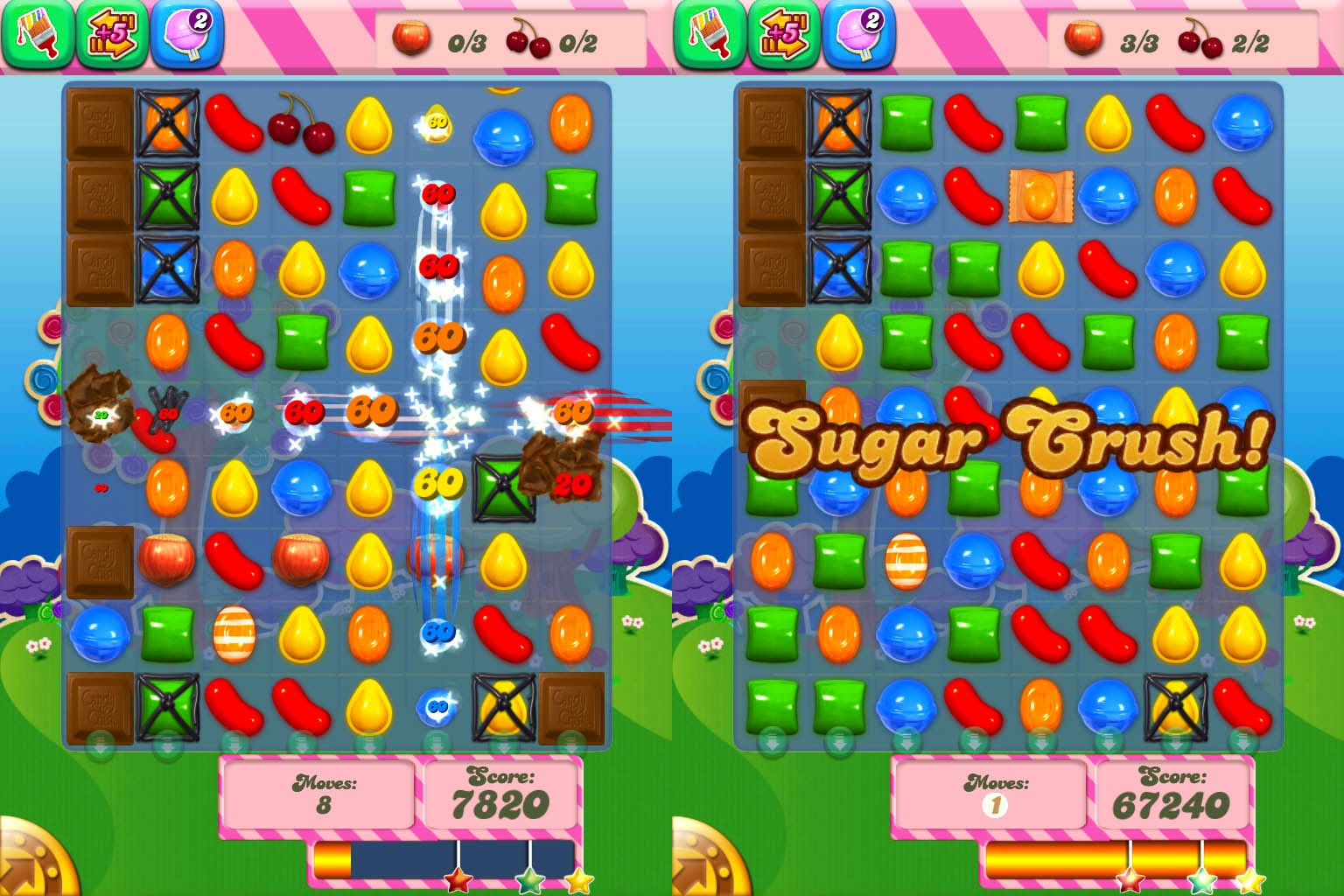
Although these games are made by much smaller teams than the big AAA giants, they are by no means bad. Take Candy Crush Saga by King which has been a cultural phenomenon across all mobile devices. The game concept is as simple as the sweet colourful design which is surprisingly moorish to play.
I said earlier in this post which was that all indie games don't have packaging which as it turns out, isn't entirely true. I remember about this gaming pledge where the developer behind the much loved Broken Sword series asked their fans to donate money to fund the next instalment of the much loved series.
The release of the game was intended for a digital download to the general public but, as a thank you to the fans, the developer offered a range of special collectors editions of the game with exclusive, behind the scenes content and artwork.
As for the game it's self, it's a game genre knowns as the point and click adventure game. The player has to solve different type of logical puzzles and quests to progress the story and the game along. The thing that set this out from the crowd was the beautiful, hand digital painted backgrounds and charming characters.
With enough time this may well be a fantastic way forward for because I know I have the software to create stills of my game within my grasp, it's just time that may limit me.
This post highlights that a simple indie game may well be the way forward for me. I have proved that packaging for these type of games do sometimes happen as well.
I have started to look at some of the various styles that interest me which are used by developers within the gaming industry. What this will do is give me an understanding of what can and can't be imitated within the time I have got and the tools at my disposal.
I also want to answer questions such as what cultural aspect has informed the game and who the game is aimed at.
Cel Shaded
Cel shaded is mix between a 3D an 2D look, it gives the impression of a hand drawn feel which is mainly seen in Japanese gaming which has been informed by the popular manga comic book style.
Okami
This game is a perfect example of a cel shaded game but this one was informed by a different style of art which most probably informed manga. Okami's visual style was inspired by Emakimono which where horizontal scrolls which tell a story of battles various other stories of Japan.
It's clever how the developer has turned to old methods which tie into theme and story (which takes place in Japan) of the game and adapted them to new technology, even black lines of the game imitate a hand drawn in ink look which reminds me of the Japanese calligraphy style.
So who would this be aimed at? Well in my opinion, it would be aimed at any age group. The colourful look and simplicity would appeal to children, but I also think it would appeal to a mature person who would appreciate the thought behind it.
Okami 2006 by Capcom
Examples of Emakimono
2d Cut Out
2D cut out is a method seen a lot these days in animation and games. The backdrop is usually a still layered image that creates depth with an animated character at the front that has simple animations.
I like this simple approach and how they have used simple textures effectively on the trees an landscape. Yet again I would say this is aimed a wide audience, children would find it appealing for it's simplicity and yet casual gamers who play on phones and tablets could enjoy this as well, but most of all fans would play this who grew up with this much loved character in the mid 80's.
So what inspired this style? The only link that I could find was a paper cut animator called Quirino Cristiani. He used paper cut animation in the early 19th century which surely inspired the likes of this style?
Handicraft is a process which involves making the game environments out of various materials and textures, however some games take the word "craft" even further. Little Bi Planet is one of those games, the whole idea lies with the clever tag line that goes with the game "Play, Create, Share". Gamers have the tools to create their own platforming levels and share them across the world using their own images.
I can see this aimed at creative individuals such as myself and strategic thinkers who love logical puzzle games like theme park. As for what inspired this style, it's hard to say but only the creative industry as a whole springs to mind.
Little Big Planet Sony Computer Entertainment
Yoshi's Story By Nintendo
Task
This would be a nice opportunity for an experiment, I could combine the flat 2D style with the handicraft style. I could design a still image of a platforming level using photoshop as a tool.
Retro
Retro games are the humble starts of digital gaming, the early games started their lives in arcades before being brought to our homes. Recently retro games are becoming more and more popular for their nostalgia to all the people who grew up with them.
Out of the many styles on offer, this is one style that could be achieved easily within the time I have left but is it playing safe? I want to create artwork for a game that will challenge my skills, rather than get me the grade. I would rather work towards a challenging task and fail, than breeze through without learning anything.
Pac Man
Super Mario by Nintendo
Sonic the Hedgehog by Sega
Outlandish & Fantasy
Almost every game is a work of fantasy but are mainly set within the bounds of possibility in our world. However some games take it up onto another level. Shadow of Colossus for example creates a whole new fantasy world for you to explore at your disposal, a world with giant creatures roam a deserted land which all need to be defeated for a purpose.
Although this is outlandish work of fantasy, I can see how the developers have drawn inspiration from real world animals or parts of them to create theses creatures of fantasy.
An important reminder here is to never rule out nature of a way to create creatures or characters even when approaching my design. An interesting task here would be to sketch a design of my own using animals as reference to draw up something unique!
Stylised
Most of the games that I have already covered in this post come user this category. This time I'm looking a little further into what makes a stylised game. The first thing that I notice is how characters are designed like a caricature with over exaggerated facial features and bodies as you can see from the following two images.
Gears of War 3 Character Art
Bioshock Infinite Character Art by Irrational Games
Another example is the use of colour. A stylised game seems to follow a distinct colour pallet through out like this image form Bioshock Infinite. I have played this game and I know form experience that this games environment follows this distinct style throughout.
Bioshock Infinite Art by Irrational Games
Here is example of a game which I believe isn't a stylised game. The developers have seemed to go with a hyper realistic look with The Last of Us which is for a very good reason. This is a game which takes it's story and characters very seriously. It's about a very human story which explores a almost father & daughter relationship set amongst a post apocalyptic word and for that to work, I believe that's why the developers chose a realistic look to create very real characters.
The Last of Us Artwork by Naughty Dog
I feel this has been very useful to look and write about the various new and old styles in a little depth.The only problem is that you can keep on going because their are so many different type of styles out there. Although I'm not making an actual game but rather a packaging, I still will need an in game shot which shows the viewer what the game will look like so a good understanding can only help the development of a unique style.
Information on styles where sourced from, opinions are my own: